
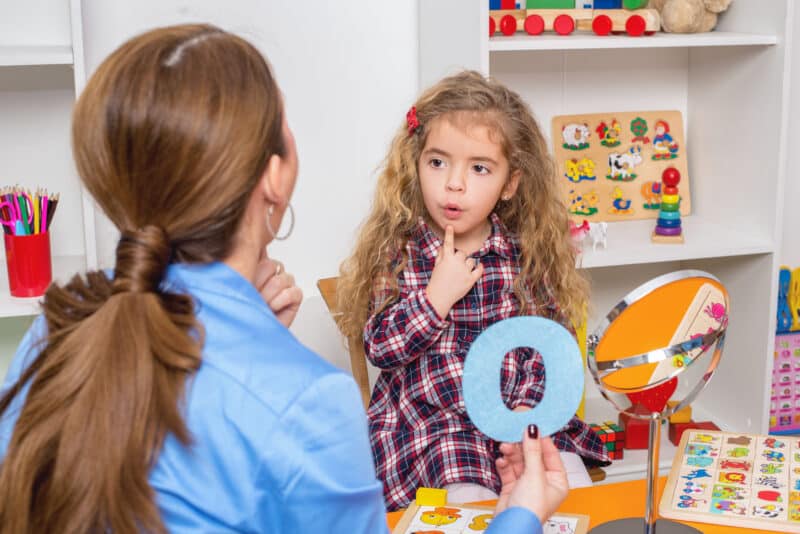
Language is a core part of how we connect with one another, and it is at the very heart of learning. For some children, language skills don’t come as naturally as they do for others. Identifying and supporting language development early can make all the difference for children with developmental delays. Language delays can have a ripple effect, impacting everything from academic skills to friendships, making early intervention a critical step toward helping children thrive in school and in the community. In this blog, we’ll cover: key language milestones from infancy to early elementary years, how to start early intervention services and get families involved, and yhe types of intervention services available at home, school, and in the community.

Language development is the process through which students acquire the ability to communicate. In typically developing children, this process begins at around 3 months of age and continues most intensely during the first three years of life. This process begins with an infant’s cry which is when children learn that crying brings food, social attention, and general nourishment. The crying develops into basic cooing at around 3 months when babies begin to understand basic speech sounds. Cooing turns to babbling, which turns to a child’s first few communicative words by age one. By two or three years old, most children know about 500 words. There are developmental checklists that lay out these foundational steps in sequential order.

When working with students with moderate to severe disabilities, relationships and a student’s motivation are central to academic success. In Applied Behavior Analysis (ABA), relationship building is also called pairing. Pairing is the process of establishing yourself as a reinforcer to build a positive relationship with a child. When a teacher or paraprofessional is properly paired with a student, the student should look forward to working with the adult. It is possible to pair people, environments, and objects.

Daily living skills are the routine self care activities that people engage in that promote independence. These skills span from toilet training to food preparation but generally help people maintain a level of health and safety. Some students with delays or disabilities are slow to master daily living skills but it is possible to teach these vital skills. Daily living skills are each set of multiple skills that are strung together. For instance, think about hand washing. Consider all of the smaller component skills that a person has to do to perform the larger task of hand washing: turning on the sink, pumping soap, tolerating getting wet, understanding clean versus dirty. Read on!

As adults, we rely on visual supports to navigate our daily lives. We often look to our Google calendars to see what’s next on our schedule. We create lists for the grocery store, and consult our never-ending to-do lists to complete tasks. Checking items off our lists and reviewing our calendar for what's next gives us a sense of accomplishment and reduces anxiety by providing clarity about our upcoming activities. Now, imagine being a 3, 4, or 5-year-old and getting placed inside a classroom with strangers, likely the first time away from parents for an extended period, with no idea about what will happen next. In these instances, implementation of visual supports can help ease the anxieties of our youngest learners, and especially for our students with disabilities.

Imagine that peak moment when something sour, like lemon or lime juice, hits your tongue. You experience a rush of sensations, from the tingling on your taste buds to the involuntary wince and twitch of your facial muscles. Now, think about those times when you have an irritating itch on your body that you just can't seem to soothe, no matter how hard you try. These sensations might seem like minor inconveniences to some, but for individuals with sensory processing challenges, they can be a daily struggle.
Imagine a young student named Daniel, eyes wide with excitement as he picks up his brand new book, Chicken Little, to follow along as his teacher reads it aloud to his class. He thinks to himself, “This book has farm animals! I like to watch the chickens when we go to my grandmother’s house.” At his last school, Daniel never had his own copy of the books, let alone a brand new copy! Some of the letters on the pages of the book seem like a mystery to him, but with each new lesson activity in phonics and phonemic awareness, those letters begin to make more sense. They transform into sounds, words, and eventually, as he progresses through the year, stories.
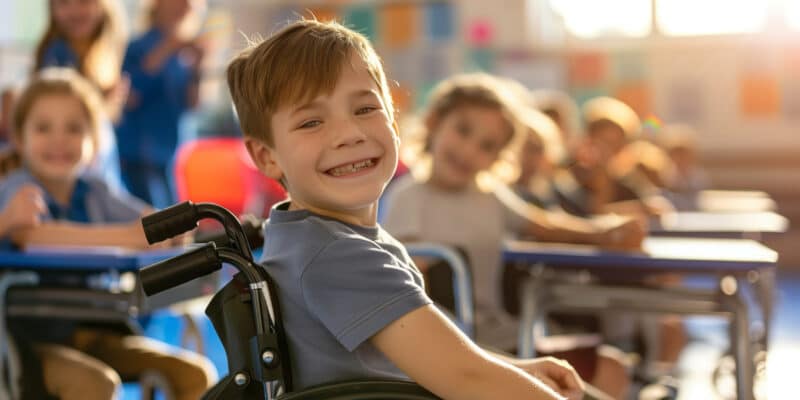
An inclusive classroom is defined as a classroom in which a general education teacher and a special education teacher work and instruct together to support all students in their classroom. Data from inclusive classrooms point to benefits across academic and social domains for students with and without disabilities: One 2015 study found that students with disabilities in inclusive settings are nearly five times more likely to graduate on time than peers that are not. Typically developing students in inclusion-based settings experienced social-emotional gains that their peers in non-inclusive settings did not. With 64.8% of students receiving special education services in inclusive classrooms, it is critical that these spaces function optimally to support all students, and that all stakeholders, from administrators to teachers to related service providers, are on the same page.

Congratulations, teacher! You’ve worked hard all year long to hone your craft and deliver high-quality instruction to your students with disabilities. By now, you know them better than you could have imagined when the school year began last fall. You’ve built strong relationships and seen inspiring growth in their academic and personal goals. Now, you’re in the home stretch with summer vacation just around the corner. With all the hard work you’ve poured into this school year, let’s be sure to end well.
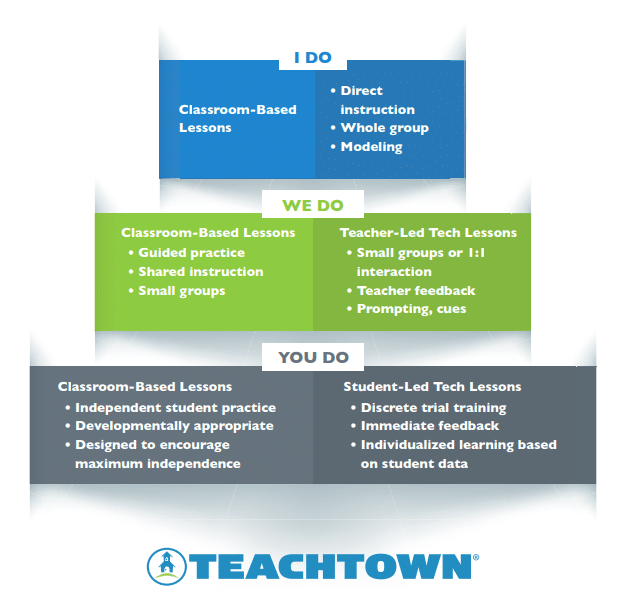
In every classroom, a teacher must determine the ways in which students will engage in learning from a list of instructional methodologies. The phrases instructional methodology, teaching method, instructional method all describe how a teacher is delivering instruction to help students meet the lesson objective. There are a variety of evidence-based methods from which to choose, and expert teachers often use a combination to best support the wide range of student needs and strengths in their classroom. Read on to learn about three of them!