
A student’s educational experience is shaped largely by their internal emotional landscape. For learners with disabilities, mental health is a key indicator of their readiness to process new information and form social connections. By focusing on students’ mental health and well-being, we provide them with the tools they need for long-term success. This article explores the intersection of disability and mental health, offering insights and proactive strategies to ensure every student feels empowered and supported in their learning journey.
The World Health Organization defines mental health as “a state of mental well-being that enables people to cope with the stresses of life, realize their abilities, learn and work well, and contribute to their community.” Schools encounter a wide range of mental health challenges, including anxiety, trauma, depression, social isolation, and eating disorders. Students with disabilities can face a double burden of experiencing the same struggles as their peers but amplified by significant barriers.
Research shows that children with intellectual disabilities (ID) are more likely to experience mental health problems than their typically developing peers, with up to 50 percent of kids with ID estimated to have a mental health disorder, such as anxiety, depression, etc. This can be due to:
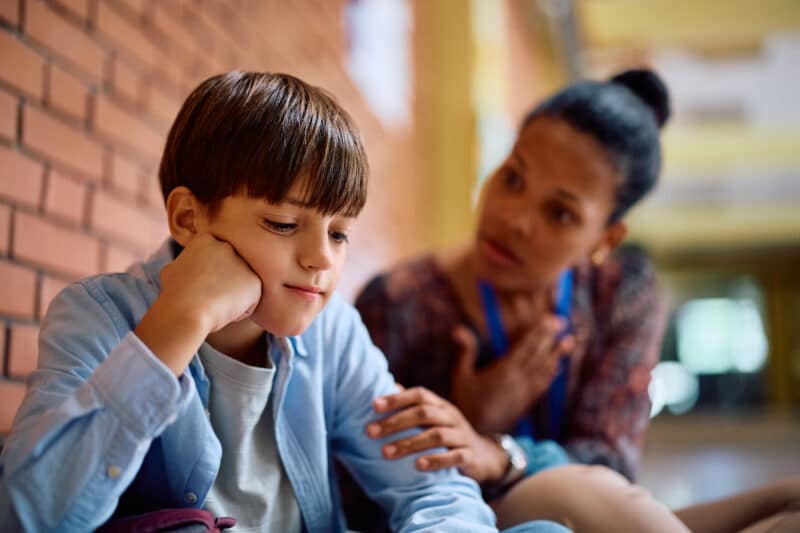
Advocating for your students starts with staying observant. Since students with disabilities are more likely to face mental health challenges but less likely to be diagnosed than their peers, it is vital to watch for signs of distress, such as changes in behavior, increased irritability, etc.
Use the following strategies to build a classroom environment that supports emotional well-being alongside academic growth.
1. Prioritize communication access. Communication allows students to meet needs, socialize, advocate, and perform so many more functions vital for life satisfaction and well-being. If a student cannot tell you they are frustrated, they will likely show you through their behavior. Ensure every student has a functional mode of communication, whether it is AAC, sign language, or a picture board.
 2. Aim for the Zone of Proximal Development. Mental health is tied to self-esteem. If work is too easy, we unintentionally send the message that we don’t believe in the student’s potential. If it’s too hard, students may shut down. Find the sweet spot where a student is challenged but supported, building the “I can do this” mindset that is vital for resilience.
3. Build social skills and community. Research shows that people who experience high levels of loneliness are more likely to struggle with their physical and mental well-being. Relationships are the best buffer against mental health struggles. Implement low-pressure moments of student bonding, such as morning meetings and group projects. If possible, incorporate moments with atypical peers to foster an inclusive community and cross classroom relationships. Human connection can go a long way in helping students feel known and cared for.
4. Explicitly teach regulation. Teaching skills such as feeling identification and self-regulation can help alleviate the intensity of unwanted feelings and reduce challenging behaviors. Find time to explicitly teach coping strategies. Social Stories / Social Comics are a great tool. Consider incorporating a social emotional skill time into your schedule to engage in role playing and perspective taking activities. Try creating a dedicated calm-down corner equipped with sensory tools like weighted lap pads or noise-canceling headphones.
5. Lead with strengths. It is easy for a special education environment to become deficit-heavy. Implement positive reinforcement that highlights a student’s existing capabilities. Incorporate students’ specific interests—such as using a preferred theme to teach a difficult skill—to increase engagement and enjoyment with learning.
 6. Get moving and get creative. Movement is a natural stress-reliever. Studies show that even short bursts of physical activity or time spent outdoors can lower cortisol levels. Similarly, art can serve as a means of self-expression and a therapeutic outlet for complex learners. These moments also allow students to engage in the types of activities as their neurotypical peers.
7. Design an inclusive classroom. Create a sensory-friendly space by reducing visual clutter, managing loud noises, and providing sensory input when needed (fidgets, wobble chairs, etc.). Ensure your classroom represents your students by using and displaying materials that represent a diverse range of cultures and abilities. When a student sees themselves reflected in a book or a poster, it reinforces their sense of identity and worth.
Cultivating a mentally healthy classroom is not about adding one more task to your to-do list; it is about shifting the focus to the humanity of each student and creating a space where complex learners can thrive emotionally as well as academically.
At TeachTown, we believe that education should never exist in a vacuum. While academic progress is vital, we recognize that a student’s success is equally tied to their ability to self-advocate, solve problems, and develop healthy peer relationships. That’s why we designed our Whole Child Approach with the tools to address these multifaceted needs seamlessly, from early childhood through the transition years.
Our standards-first, adapted core curriculum, enCORE, serves as the academic heart of the classroom, and our integrated suite of interventions truly brings the Whole Child Approach to life. Solutions like Social Skills use animated video-modeling to teach socially significant behaviors, while TeachTown Basics and Transition to Adulthood nurture the independence and functional skills students need to navigate the world with confidence. By uniting core academics with targeted emotional and behavioral supports, we help you pave a path toward measurable growth and lifelong success for every learner.
Ready to support the holistic needs of your complex learners? Schedule a meeting to learn more!
Contributor Bio
Tasha McKinney brings over eight years of experience in education. After four years of teaching outdoor education programs, she pursued a Master’s in Early Childhood Special Education at the University of Texas. Since then, she has worked in classroom settings and created content for EdTech companies.