
Imagine the type of environment that helps you focus. There’s probably good lighting, maybe some plants, and decor that brings you joy. Your space is organized, and when you need something, you know where to find it. Setting has a huge impact on how we feel and our ability to tackle the task at hand. The same is true for students!
The environment you create in your classroom can play a major role in your students’ behavior and achievement—and your own morale as an educator! Use these evidence-based strategies to create a structured classroom environment that promotes engagement, independence, and other positive student outcomes.
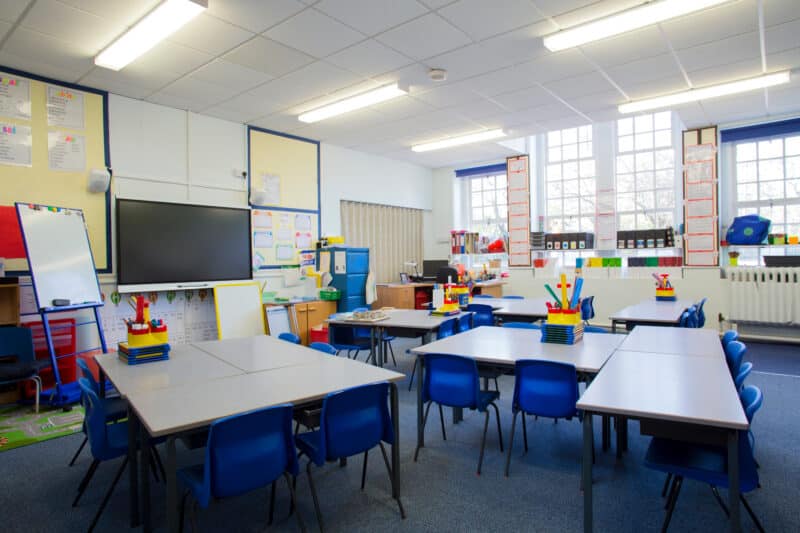
The foundational element to every classroom is classroom design, which includes all of the elements of a classroom and how they are set up. Classroom design and layout are pivotal to how staff and students access learning materials, instruction, and social interactions with each other. A few ways to design your classroom for increased focus and learning include:
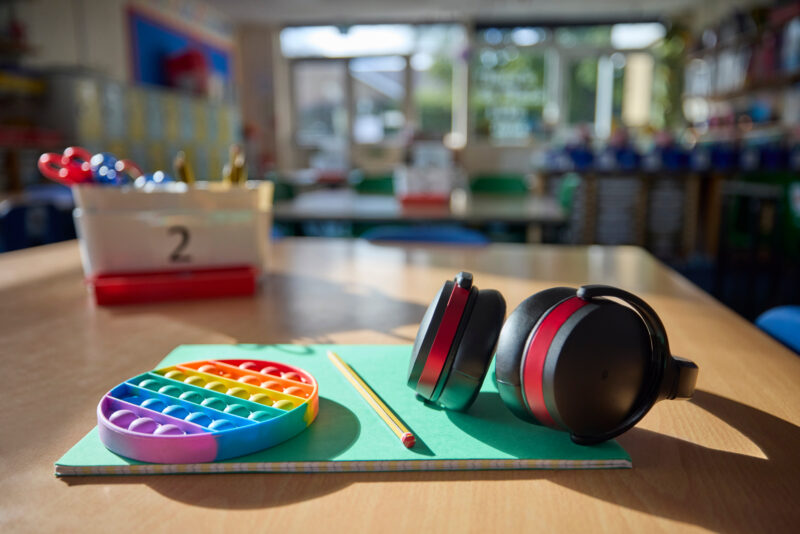 Make sure your room is easy to navigate. Walkways should be wide, inviting, and completely clear of obstacles to eliminate those accidental bumps that trigger disruptions during transitions. Double-check that all pathways comfortably accommodate students navigating the room with wheelchairs, walkers, or other mobility devices.
Think about how often you check your phone calendar, planner, or the wall clock throughout the day. We all love knowing what’s coming next, and our students—especially those with developmental delays and disabilities—crave that exact same predictability. Visual supports are the ultimate tool for easing transition anxiety, teaching time management, and keeping student engagement high.
Try weaving these practical visuals into your daily routine:
Tip: We want visual supports to be reinforcing for students. Customize personal visual supports with characters and images your students are interested in. It makes the tools feel uniquely theirs and boosts buy-in.
How you prep and organize your work zones can make or break independent focus. Labeling your stations and keeping materials organized means fewer disruptions. Try keeping a rolling cart or a designated crate right next to each learning zone stocked with the exact supplies needed for that specific block (math counters, communication visuals, AAC devices, or writing tools). If you have to teach multiple subjects at the same table, organize your lessons into color-coded binders or file folders so you can pivot from one subject to the next without losing momentum.
Unstructured downtime is usually when behavioral challenges pop up. Create a game plan for your speedier students by setting up a Choice Board or a Early Finisher Bin packed with independent, engaging (still educational) tasks.
Just like we teach academics, we need to also explicitly teacher routines and expectations to our students. Routines provide predictability in the classroom and are an important components of classroom management. To get started, consider making a list of all the activities that occur throughout the school day, including:

From that list, prioritize which routines to explicitly teach and practice with your class first. Build into your schedule time to teach routines at the start of the school year as well as times to reteach them throughout the year (especially after long breaks). Lastly, incorporate a quick review of the routines prior to the start of each activity throughout the school day. By teaching, modeling and reinforcing, students will develop skills that lead to increased independence.
 It’s easy to get lost in appeal of having a Pinterest-worthy classroom set-up, but what makes for a successful learning environment has far less to do with aesthetic and much more with how students feel when they’re in that space. Do they feel safe? Inspired? Independent? Curious? If so, you’re on the right path!
As an educator, you have a lot on your plate, and spending extra thought and time (and often money) on your classroom can easily feel like another task. But investing in your space, especially before back-to-school, sets your students up for success and pays dividends in student outcomes throughout the year!
At TeachTown, we understand that creating this level of classroom structure requires the right tools. That is why our comprehensive, inclusive early childhood curriculum, Launch for PreK, and our K-12 standards-first adapted core curriculum, enCORE, were created with the classroom in mind. TeachTown’s solutions come fully equipped with ready-to-use visual supports, structured guidance for whole-group, small-group, and individual rotations, built-in differentiation, and engaging manipulatives. By pairing responsive technology with robust physical classroom resources, Teach Town helps special education teams streamline classroom management, maximize instructional time, and drive measurable student outcomes.
Contributor Bios
Tasha McKinney brings over eight years of experience in education. After four years of teaching outdoor education programs, she received a Master’s in Early Childhood Special Education from the University of Texas. Since then, she has worked in classroom settings and created content for EdTech companies.